 Vox Stella
Few crimes remain as fixed in American memory as the Tate-LaBianca murders. Projects such as Netflix's 2025 documentary Chaos: The Manson Murders are one reason the case keeps returning to public conversation.
But when people search for Manson murders astrology, the serious question is much narrower than spectacle. It is this: what might a disciplined forensic astrology lens have highlighted, if it had been used carefully?
That question matters because forensic astrology, at its best, is not about pretending a chart can solve a famous crime. It cannot. It is about asking whether symbolic patterns cluster around themes that may help organize attention: violence, concealment, unstable communication, multiple actors, timing pressure. In other words, it offers a structured way to think, not a replacement for evidence, witness testimony, police work, or forensic science.
Respect and limits first: the victims were real people, not symbols. This article treats the case as a historical forensic astrology case study and uses careful language on purpose. The point is pattern analysis and methodological restraint, not sensationalism.
How forensic astrology works in a historical case
For non-specialists, forensic astrology is easiest to understand as pattern analysis. An astrologer studies a chart cast for an event or, where the timing is uncertain, several plausible event windows to see whether symbolism clusters around certain conditions.
A forensic horoscope is not useful because one placement looks dramatic. It becomes useful only when multiple signals begin pointing in the same direction. In historical cases, that usually means testing more than one time anchor, comparing outputs, and watching for convergence.
That is why timing matters so much. Crimes do not always unfold at one neat documentary-ready minute. They happen across windows. In astrology, a weak anchor can produce noise, ambiguity, or symbolism that feels too vague to trust. A stronger anchor may finally concentrate around a narrower pattern. Responsible practice means admitting the difference.
The historical case at a glance
Britannica's summary of the Tate-LaBianca murders is enough for the narrow purpose of this article. On August 8-9, 1969, Sharon Tate and four other people were killed at 10050 Cielo Drive in Los Angeles. On August 10, Leno and Rosemary LaBianca were killed in their Los Angeles home the following night.
| Case | Exploratory anchors | Read quality | Main pattern |
|---|---|---|---|
| Tate | 00:30, 01:15, 04:10 | Weak early, stronger late | Noise, then violence + concealment + multi-actor pressure |
| LaBianca | 02:00, 06:00, 08:00 | Clearer and more stable | Violence + concealment + linked-actor dynamics repeating across anchors |
The contrast is the core lesson of the article. Tate shows noise, then direction. LaBianca shows direction, then reinforcement.
Sharon Tate forensic astrology: why the Tate chart is the harder case
From a forensic astrology standpoint, Tate is the harder case. That does not make it less important. It makes it more honest as a case study, because not every event chart produces a clean signal.
In the exploratory replay inside Vox Stella, three candidate anchors were tested for Cielo Drive: 00:30, 01:15, and 04:10. The first two windows were weak. At 00:30, the reading leaned toward light deception or obscurity noise without enough clean directional value to justify a strong interpretation. At 01:15, the pattern still felt thin: some background house emphasis, some symbolic haze, but not enough convergence to trust.
That matters because one of the most important lessons in forensic astrology is that a weak chart should be called weak. Tate is useful precisely because it shows the method at both its best and its limit: uncertain timing can produce noise, and the analyst's job is to resist storytelling when the symbolism is not doing enough.
The 04:10 anchor was different. That was the strongest Tate window by a clear margin. Here, the symbolic field concentrated around violence, hidden or concealed factors, and possible witness or accomplice dynamics. In plain language, the stronger chart stopped feeling random and started pointing toward three overlapping ideas: serious harm, obscured circumstances, and more than one relevant role in the event field.
This was also the anchor where the chart carried a strong 12th-house emphasis, shorthand for what is hidden, difficult to access, or not immediately legible. For non-specialists, that can be understood as a concealment pattern: facts that are not clear on first view, motives operating in the background, or communication that feels muted, fractured, or obscured.
So what might a careful Sharon Tate forensic astrology reading have highlighted? Not a solved chart. Not a magical answer. More likely, it would have highlighted a late-forming cluster around violence, concealment, and multi-actor or witness themes, while also warning the analyst that earlier anchors were too weak to trust.
LaBianca murders astrology: why the second night reads more clearly
The LaBianca murders are the cleaner forensic astrology example. In the exploratory replay, three anchors were tested in Los Feliz: 02:00, 06:00, and 08:00.
At 02:00, the output still carried some of the same low-grade problems seen in Tate: light deception themes, background noise, limited clarity. But by 06:00, the pattern sharpened. This was the strongest LaBianca anchor, and it concentrated around violence, associate or linked-actor dynamics, concealment, and hidden-house emphasis.
Then came the part that matters most in forensic astrology: the pattern held. At 08:00, the chart was still strong. Violence remained foregrounded. Deception and concealment did not disappear. The symbolic field continued pointing toward a coordinated, obscured, multi-person dynamic rather than a random or purely isolated eruption.
That repetition is what makes LaBianca murders astrology the cleaner case study. In forensic astrology, convergence is the real currency. When more than one plausible anchor keeps returning to the same core themes, the analyst has better reason to treat the pattern as meaningful.
The stronger LaBianca anchors also suggested hidden-house emphasis pulling both the event and the people involved into a more covert field. In plain English, that is the kind of chart that symbolically places people and events under pressure from what is obscured or difficult to fully see at first. Again, that does not identify killers or prove motive. But compared with the historical case, it does suggest a cleaner directional emphasis around violence, concealment, and linked-actor dynamics.
Chart output vs. real-life outcome
The contrast between the two cases is the real lesson.
In Tate, the early anchors were weak. Only the strongest later anchor produced a meaningful cluster, and when it did, that cluster emphasized violence, hidden factors, and possible accomplice or witness themes. Tate therefore becomes a powerful example of forensic astrology at both its best and its limit: weak timing anchors produce noise, while a stronger anchor may finally yield direction, but not certainty.
In LaBianca, the stronger anchors were clearer and more stable. Violence, linked-actor dynamics, and concealment were not one-off impressions. They repeated. That repeated convergence makes LaBianca the cleaner forensic astrology case study.
Put simply, Tate shows noise, then direction. LaBianca shows direction, then reinforcement. That difference matters because it illustrates how responsible interpretation should work. A disciplined astrologer does not say, "the chart reveals who did it." A disciplined astrologer says something much narrower: this anchor is weak; this one is stronger; this pattern repeats; this one does not.
What this forensic astrology case study teaches
The first lesson is that some charts are more legible than others. A famous case does not automatically produce a clear read. The symbolic field may be partial, messy, or timing-sensitive.
The second lesson is that timing matters. Historical crime analysis often deals in windows, not exact seconds. That means the difference between a weak chart and a useful one can be measured in minutes or hours.
The third lesson is that convergence matters more than drama. A single striking signature can tempt an astrologer into overreading. Several anchors repeating the same themes are far more persuasive than one dramatic-looking chart.
The fourth lesson is that responsible language matters. The right phrasing is careful: "might have highlighted," "points toward," "suggests a directional emphasis," "raises the possibility of," "does not prove, but may help organize attention around." That restraint is not weakness. It is the ethical center of the method.
Why structured tools matter
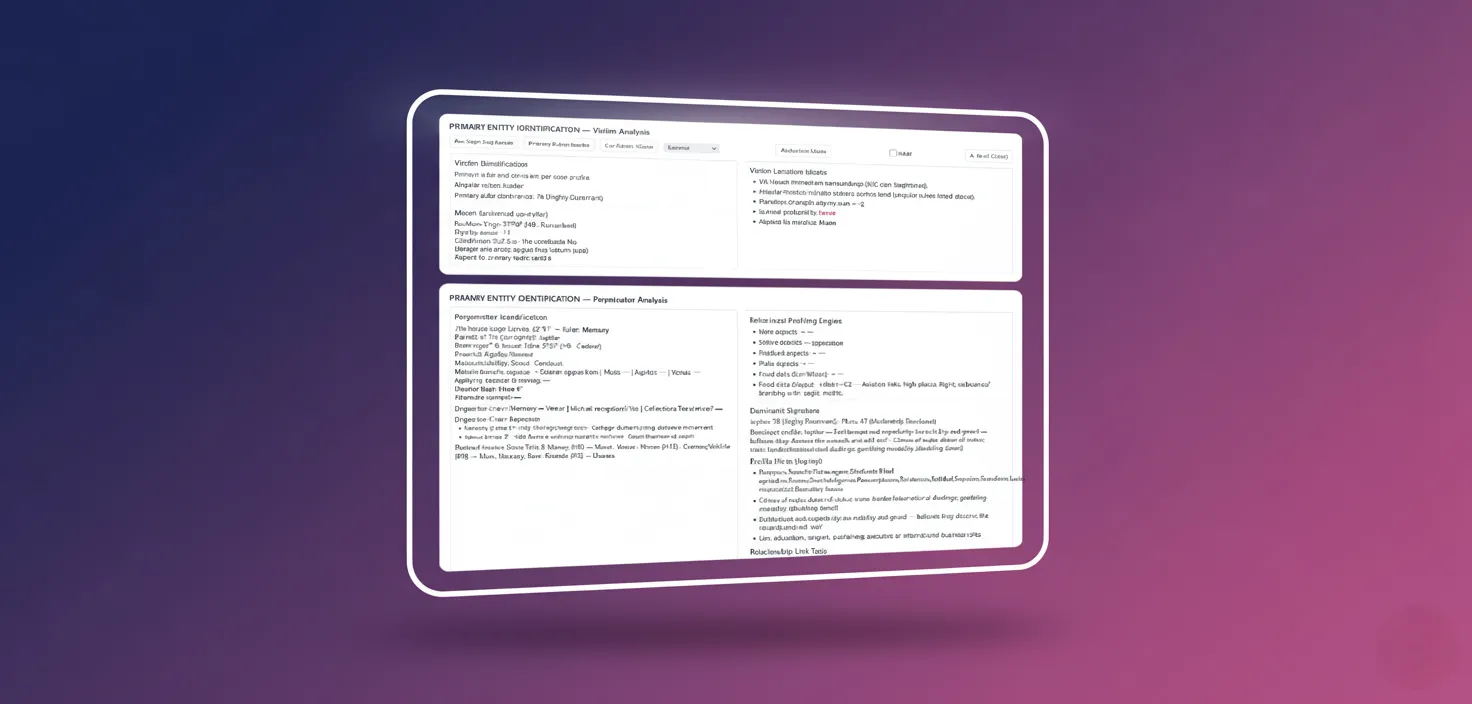
This is where modern tools can help. Used well, a platform like Vox Stella can make forensic astrology more structured by helping analysts compare multiple event anchors, track repeating themes, and separate stronger convergence from weaker background noise. That matters most in cases like Tate, where timing sensitivity can easily tempt an astrologer into overconfidence.
The point is not that software creates certainty. It does not. The point is that structure can make interpretation more honest. If you want the broader method before using the product, start with What Is Forensic Astrology? and How to Choose an Event Chart for Forensic Astrology.
Final takeaway
If the question is what a disciplined forensic astrology lens might have highlighted in the Tate and LaBianca cases, the most responsible answer is modest.
In Tate, not much at first, then a stronger late-forming concentration around violence, concealment, and possible accomplice or witness dynamics. In LaBianca, a cleaner and more stable convergence around violence, concealment, and linked actors.
That does not solve history. But it does offer a structured way to think about symbolic pattern recognition without confusing it for proof.
Explore forensic astrology in a more structured way with Vox Stella.
Update Vox Stella in-app, or use the latest download from the website if you need a fresh install. If prompted, verify using your key.
FAQ
What is forensic astrology?
Forensic astrology uses event charts and symbolic timing analysis to look for patterns around an incident. In responsible practice, it is about directional emphasis and convergence rather than certainty.
Is forensic astrology the same as true crime astrology?
Not really. People sometimes use terms like true crime astrology or murder chart astrology loosely, but responsible practitioners prefer forensic astrology because the goal is analysis, restraint, and historical seriousness rather than spectacle.
Why is the Sharon Tate forensic astrology example harder?
Because the Tate analysis is timing-sensitive. Two exploratory anchors read weak and noisy, while one later anchor reads more clearly. That makes it a useful example of how uncertain timing can muddy a forensic horoscope.
Why does the LaBianca murders astrology example look cleaner?
Because the stronger LaBianca anchors repeat similar themes: violence, concealment, and linked-actor dynamics. That repeated convergence makes the case more directionally stable.
Can a forensic horoscope prove guilt?
No. A forensic horoscope cannot prove guilt, motive, or an exact sequence of events. It may help organize attention around symbolic themes, but it is not a substitute for evidence or forensic science.
VoxStella - Forensics
Forensic event charts, bundled public case snapshots, and structured symbolic evidence review on iPhone and iPad.