 Vox Stella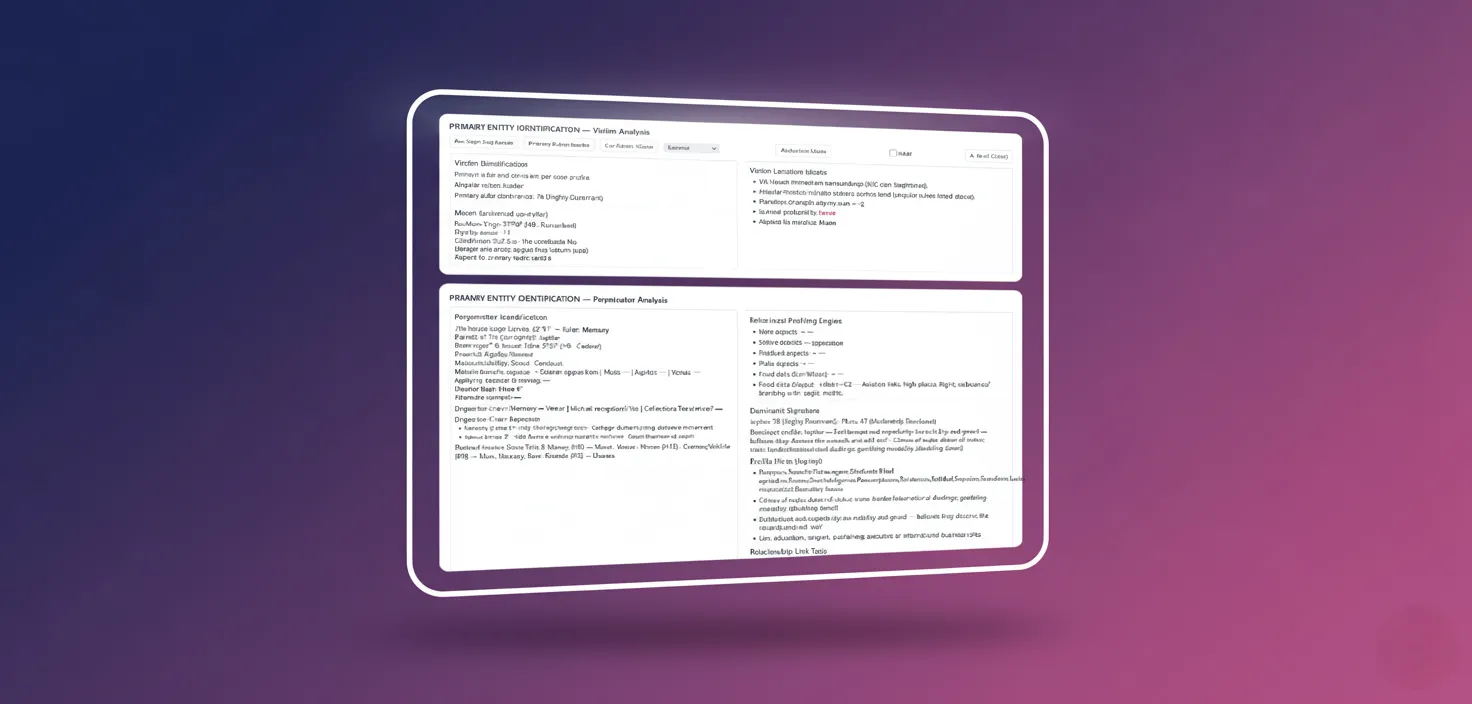
TL;DR - Forensic astrology applies horary-style reasoning and traditional techniques to examine the moment around an event. Our Forensic Dashboard automates feature extraction (planets, dignities, aspects, degree flags, fixed stars), runs transparent knowledge rules for deception, and organizes the read into tiles for Victim, Perpetrator, Witnesses/Accomplices, Outcome, and optional Abduction cues. It's built for clarity, auditability, and professional workflow.
What is forensic astrology?
Forensic astrology is the application of classical and horary-informed techniques to moments connected to incidents - e.g., a disappearance, a pivotal call, or the discovery of evidence. It analyzes planetary condition and relationships as signals that can provide hypotheses about roles, motives, and likely outcomes.
Important: This work is for research and professional exploration. It does not replace law enforcement, legal process, or licensed investigation. Treat it as an adjunct for hypothesis generation and pattern study - not as determinative proof.
How a modern, auditable workflow looks
Traditional reads can be powerful yet hard to audit. The approach below keeps the craft intact while adding structure and repeatability.
1) Data - compact chart
You capture the moment (date, time, location); we generate a compact, analysis-first chart and include solar visibility and motion flags to reduce setup time.
2) Features extraction (automatic)
- Planets, houses, sign rulers / co-rulers
- Essential & accidental dignities
- Degree flags: anaretic (29°), ingress, mid-degree, via combusta
- Applying/separating aspects with orbs
- Solar conditions (cazimi, combust, under beams)
- Fixed star hits on Sun/Moon and all cusps
3) Knowledge rules (transparent)
Codified patterns surface with evidence lines and clear labels. Instead of jargon, you'll see plain-language notes when the chart suggests themes like deception, conflict, cover-ups, or crisis. Each note includes why it appeared.
4) Scoring & synthesis
- Dominance scoring: per-planet dominance and level (angularity, house strength, essentials, aspects, motion)
- Light mediation: automatic detection of Translation / Collection of Light when present, with the translator/collector named and linked to the narrative
5) Auditable output
Every tile shows its inputs, rule fires, and links back to chart factors. Switch between concise AI Brief for quick copy and RAW for line-by-line evidence.
Use cases (responsible)
- Profile a potential perpetrator and likely motives
- Make location hypotheses for abduction cases
- Build missing-person timelines (last contact vs. discovery)
- Check witness consistency across moments
- Frame likely outcomes and next steps
Always document assumptions and keep case notes separate from legal or investigative records unless permitted by policy.
Meet the Forensic Dashboard Summary
A focused, tile-based workspace that turns a compact chart into a clear, auditable forensic read of the moment.
Purpose
- Run compact chart - features extraction - knowledge rules to produce a transparent synopsis
- Focus areas: Victim, Perpetrator, Witnesses/Accomplices, Deception, Outcome; optional Abduction view
Core Capabilities
- Features extraction: planets, houses, dignities, degree flags (anaretic/ingress/mid/via combusta), applying aspects, solar conditions, fixed star hits (Sun/Moon + all cusps)
- Knowledge rules: highlights potential deception and concealment patterns with evidence and simple category rollups
- Dominance scoring: per-planet dominance with breakdown (angular, house, essential, aspects, motion) and level
- Light mediation: presents Translation / Collection of Light if detected by the horary engine (with translator/collector when available)
Tiles (what you'll see)
1) Primary Entity Identification - Victim Analysis
- ASC, primary/co-rulers; angularity; dignity sum; survival heuristic
- Moon (universal co-ruler): position; VoC; via combusta; malefic dangers; aspect to ruler
- Inline toggles: Abduction Mode, AI Brief (Copy), and RAW evidence
2) Primary Entity Identification - Perpetrator Analysis
- 7th ruler; planets in 7th; ruler sign/° & house strength (Angular/Succedent/Cadent)
- Essential dignity flags; solar visibility (cazimi/combust/under beams)
- Ruler aspects; malefic/benefic influence summary
- Degree flags (with sign-degree dictionary fallback)
- Dispositor chain; mutual reception; Translation/Collection (from engine)
- Fixed stars on Sun/Moon and on cusps (with dictionary meanings)
- Dominant Signature + behavioral profile hints and a visualization prompt for AI
3) Witness & Accomplice Detection
- Mercury (witness/sibling), H3/H11 lists, hidden H6/H12, groupings
- Condition qualifiers (angular/succedent/cadent; retrograde; cazimi/combust/under beams; via combusta) with a witness knowledge map
4) Deception Configuration
- Algorithmic score + 4-cell meter
- Plain-language indicators that explain what's raising a flag
- Quick keywords panel mapping each flag to a short meaning
5) Final Outcome Determination
- IC sign explanation; 4th ruler placement by house (outcome)
- Planets in 4th outcomes; Node modifier
- Aspects influencing 4th (applying, classical sources; top by orb)
6) Abduction - Location & Distance Cues (toggle)
- Pivot from 7th ruler (fallback: 7th cusp): place type by sign/house; Tier A - D mapping; distance modifiers
Knowledge Integration (built-in dictionaries)
- Deception rules: Neptune/Mercury/Saturn/Node variants, including domestic deception (NN in 4th)
- IC/Outcome dictionaries: IC sign meanings; 4th ruler house outcomes; planets-in-4th outcomes; Node modifiers
- Fixed stars: per-star forensic meanings (Sun/Moon and cusps)
- Abduction dictionary: signs, houses, tiers, distance modifiers (e.g., highway/campus, hotel/waterfront, secrecy/controlled access)
Why an auditable dashboard beats ad-hoc notes
Manual read + scattered notes: flexible and personal, but hard to audit and reproduce.
Forensic Dashboard (ours): transparent evidence, rules, and scores; repeatable; team-ready.
Ethics & good practice
- Keep claims probabilistic and documented; avoid absolute language
- Record timestamps, sources, and operator assumptions
- Use the RAW view for peer review; the AI Brief for client-safe summaries
- Never substitute the tool for emergency services or legal advice
FAQs
Is forensic astrology legal to use?
Yes, for research and consulting contexts, but it doesn't replace licensed investigation or legal process. Always follow local laws and organizational policy.
What inputs do I need?
Date, time, and location for the moment you're analyzing - plus any notes that define the question and context.
Does the dashboard replace the astrologer?
No. It standardizes extraction and rules so experts can focus on synthesis and ethics.
What are "via combusta" and "anaretic degree"?
"Via combusta" is the late-Libra to mid-Scorpio path historically treated as volatile; the anaretic (29°) suggests urgency/transition. The dashboard flags both.
Do you include Translation / Collection of Light?
Yes - auto-detected by the engine, named in-tile with links to the planets involved.
Are fixed stars supported?
Yes.
VoxStella - Forensics
Forensic event charts, bundled public case snapshots, and structured symbolic evidence review on iPhone and iPad.