 Vox Stella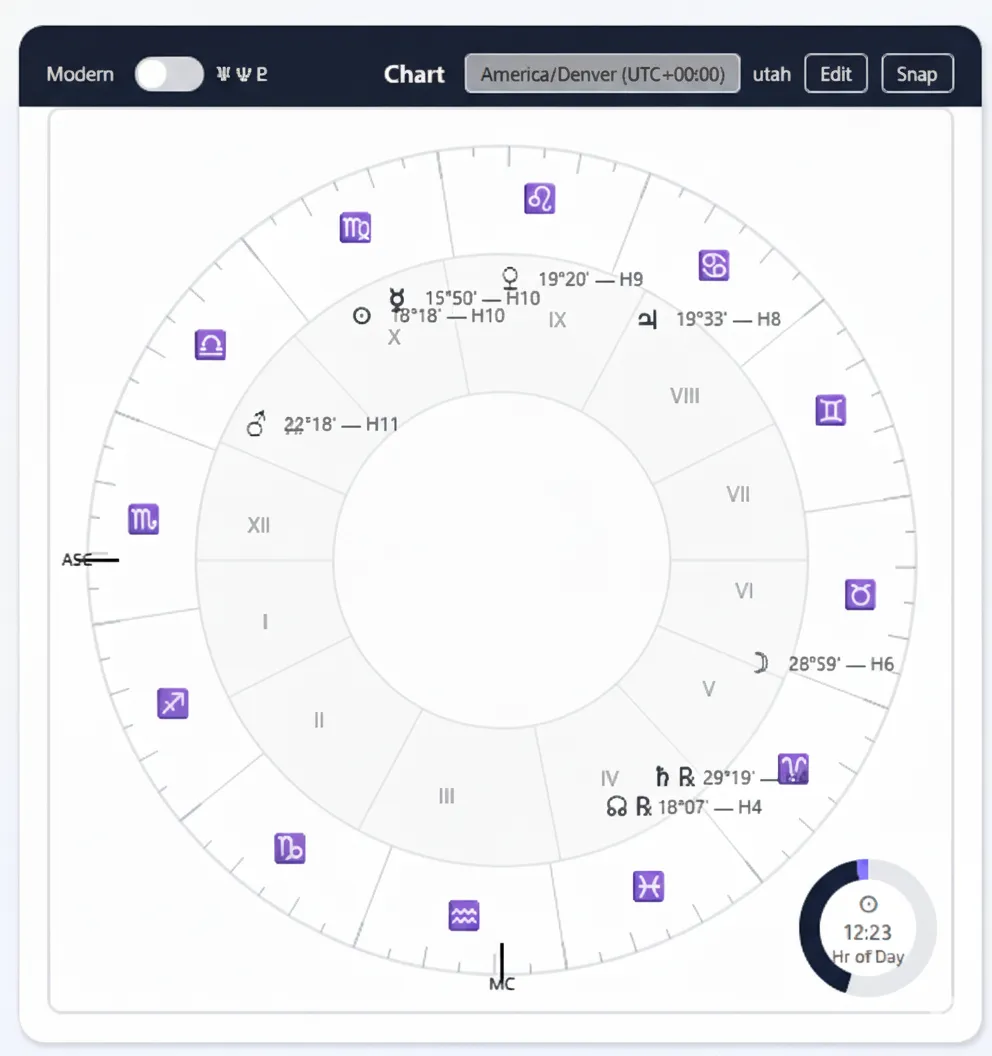
Forensic Astrology: Chart Analysis of the Assassination of Charlie Kirk
This is an educational case study in forensic astrology. It is interpretive by nature and not evidence as a court would expect. Nothing here is legal, medical, or financial advice. Treat this as informed commentary - not as fact or proof.
How this analysis was produced (in brief)
- Case-inception chart: Primary chart erected for the exact moment the case began (e.g., time the incident was recorded). Serves as the anchor for interpretation.
- Automated data & forensic routines: The app fetched positions/house cusps, processed transits/progressions/midpoints/aspect clusters/time windows, and produced a structured dossier of findings.
- AI synthesis: A language model linked astrological signatures to the structured findings, proposing hypotheses and drafting narrative.
- Human review: I reviewed the draft for clarity, added notes, and marked uncertainties/alternatives.
Limitations: Astrology is interpretive; software and AI can err; inputs can be incomplete. Correlation is not causation. Use this write-up as a lens - not as a verdict.
Victim Analysis
Ascendant: Scorpio - deeply intuitive, guarded, intense; prone to power struggles and betrayal. Vulnerabilities concealed beneath a controlled exterior.
Primary ruler: Mars - strong defensive reflexes; potential to provoke or confront before incident.
Co-ruler: Moon in Aries 28°58' (H6), Void of Course - emotionally impulsive under stress; placement in the 6th suggests the moment intersected with routine/work/service contexts. VoC Moon indicates an emotional disconnect at the critical moment; misjudgment sealed outcomes.
Perpetrator Analysis
7th house ruler: Venus - superficially charming; weaponizes affection/social grace. No acute degree flags - calculated subtlety over overt aggression.
Light mediation: Absent - operates in shadows; avoids direct illumination or accountability.
Fixed star on cusp: Pollux conjunct 9th - intellectual justification; potential use of philosophy, law, or travel-related alibi. Twin-star symbolism implies accomplice or mirror-narrative.
Dominant signature: Sun 68, Mercury 64 - command presence fused with tactical communication; performance-like staging; belief that narrative control equals impunity.
Behavioral profile: power-motivated; manipulative leadership cloaked in charisma; grooming via flattery or false mentorship.
Witness & Accomplice Detection
Mercury in 10th (witness/sibling): Key testimony from sibling or media-savvy professional; recorded, documented, or surfaced publicly.
H3 (neighbors/local): Pluto - locals withhold truth under fear/coercion; neighborhood harbors secrets.
H11 (associates): Mars - accomplice is aggressive/impulsive; enforcer-type ally.
H6/12 (hidden): Moon - emotional accomplice (helper role) enabled or obscured the incident through emotional manipulation or silence.
Deception Configuration
- Mercury combust: critical evidence/testimony obscured, suppressed, or discredited.
- Mute signs on angles: institutional silence; reluctance to speak openly.
- Mute signs on 3rd/9th: misinformation in media/legal/educational narratives.
- North Node in 4th: karmic exposure via domestic/private channels - leaked home recordings, family confession, or archived documents.
Final Outcome Determination
IC: Pisces - ambiguous dissolution; mercy, surrender, or bureaucratic fog. Public may never get a fully definitive account.
4th ruler: Jupiter in H8 - resolution driven by forensic finance, insurance, or mortality investigations; hidden assets/debts or post-mortem revelations force closure.
Planets in 4th:
- Neptune: reality obscured; evidence contaminated or compassion overrides justice.
- North Node: karmic tipping point - domestic element breaks matters open but late for prosecution.
- Saturn: hard administrative stop: limitation periods, sealed records, or bureaucratic termination.
Verbal composite: Closure emerges in files rather than court: a financial backroom or coroner's archive where an H8 signature exposes a transaction/toxicology link. Neptune's fog prevents spectacle; Saturn stamps "Closed." The Node delivers truth through private channels - late, partial, archival.
Audit Trail Note
Interpretations derive from chart placements, traditional forensic indicators (combustions, VoC, mute signs, angular stars), and archetypal mappings to house/ruler dynamics.
Frequently Asked Questions
1) Is forensic astrology "evidence"?
No. It's a patterning tool. Use it to refine questions, timelines, and documentation - not to replace facts or legal process.
2) Can this method identify a specific perpetrator?
It can highlight traits, contexts, and vectors that deserve attention. Identification rests on evidence.
3) What's the ethical way to publish analyses?
Avoid naming private individuals, include clear disclaimers, focus on structures, and keep language non-accusatory.
4) Who benefits from this workflow?
Researchers, investigative storytellers, risk consultants, and astrologers who want structured, reproducible frameworks.
5) What if witnesses are silent or fearful?
The chart points to document-based breakthroughs - paper trails, policy, audits, and public-facing roles.
VoxStella - Forensics
Forensic event charts, bundled public case snapshots, and structured symbolic evidence review on iPhone and iPad.